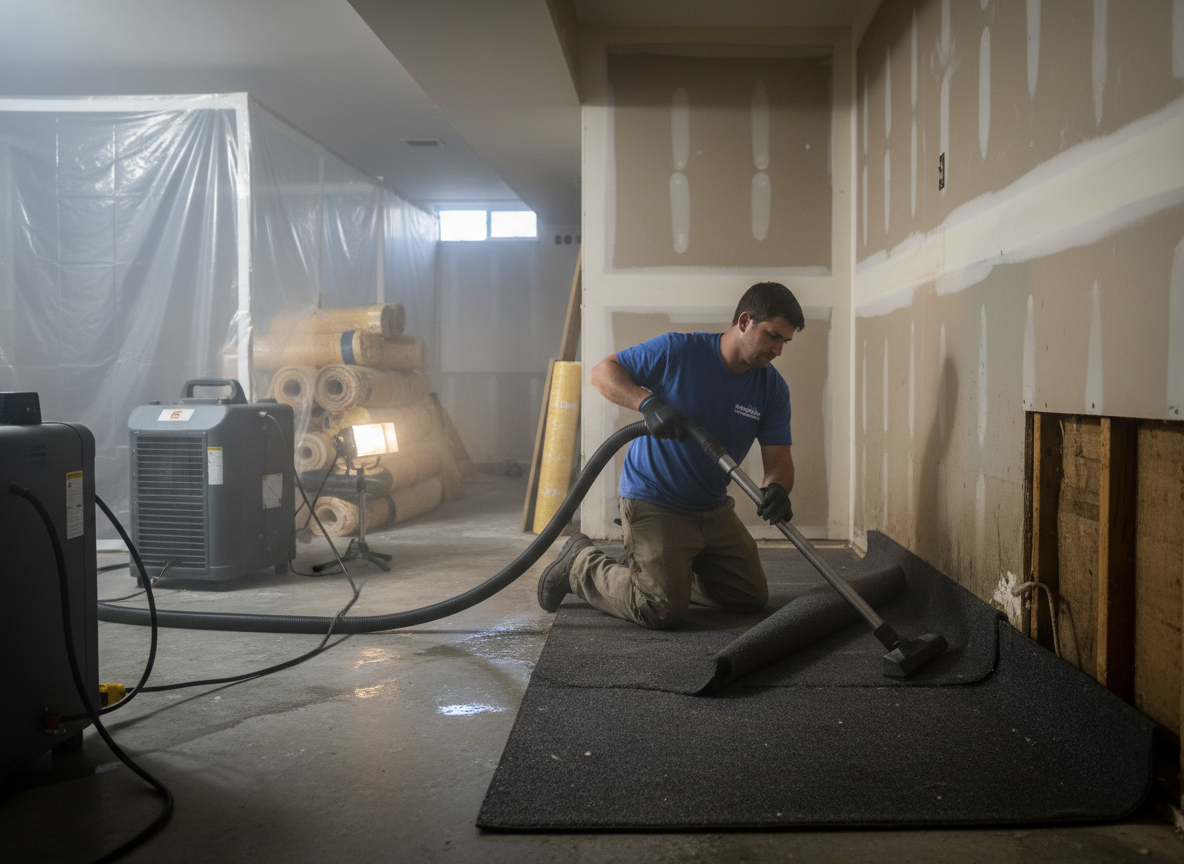
Fort Union sits between 7000 and 7200 South with a mix of 1960s-1980s single-family homes on small lots and a few multi-unit buildings along Fort Union Boulevard. Snowmelt from cold Salt Lake County winters often pools against shallow foundations and older sewer lines, sending water into basements and crawl spaces. Solidground Network at 7505 Holden St responds 24/7 to extract water, dry structures, and prevent mold before it spreads through the dense neighborhood grid.
Access in Fort Union is straightforward from Holden Street or 1300 East, but narrow driveways and fenced yards can slow equipment staging. Nearby Bingham Junction TRAX Station and Midvale City Park mark the edges where commercial runoff and irrigation from park lawns add extra moisture load during spring thaw. Crews familiar with these blocks know which alleys stay clear for pump trucks and which homes share drainage swales that require coordinated drying.
West Jordan and Murray borders mean some Fort Union jobs involve cross-city permits or shared utilities. The semi-arid summers dry surfaces fast once extraction starts, but winter humidity trapped under slab foundations demands longer dehumidification runs. Solidground Network brings the right equipment sized for these tight lots and older plumbing common throughout the neighborhood.
Around Fort Union
We regularly work near:
- 📍Bingham Junction TRAX Station
- 📍Midvale City Park
- 📍Fort Union Boulevard
- 📍Holden Street
- 📍7200 South
Water Damage Restoration in Fort Union — Local Notes
- •1960s-1980s homes along Fort Union Boulevard often have cast-iron drains that crack during freeze-thaw cycles, sending meltwater straight into finished basements.
- •Narrow side yards and fenced lots limit pump truck placement, so crews stage from Holden Street or 7200 South and run longer hoses.
- •Shared drainage swales near Bingham Junction TRAX Station collect runoff from both residential and commercial roofs, requiring coordinated drying across property lines.
- •Shallow foundations close to Midvale City Park irrigation lines stay damp longer in spring, needing extended air movement to reach wall cavities.