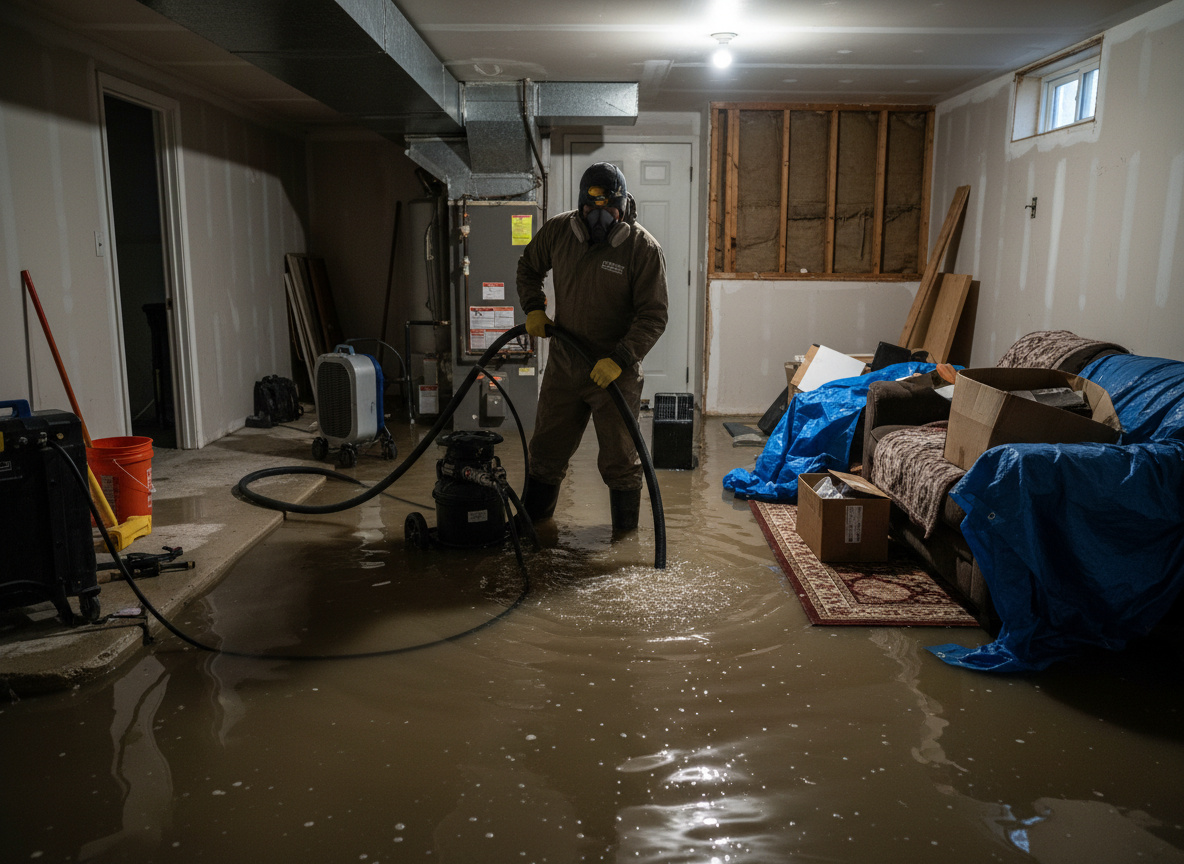
Midvale homes in Old Town Midvale and near Bingham Junction TRAX Station often date to the 1950s through 1970s with galvanized or early copper supply lines that corrode from the inside out. A pinhole leak behind a wall can saturate plaster or drywall and wick into subfloors before residents notice. In winter the semi-arid climate brings sharp freezes that expand any residual water left in lines after a warm spell, splitting joints especially in crawl spaces common under single-story ranch houses. Restoration crews must pull baseboards, check for hidden moisture with meters, and dry the structure before mold sets in on the dense clay soils that hold water longer than sandy ground farther west.
Work near Midvale City Park or along the border with Murray frequently involves slab leaks where copper has rubbed against rebar or expansion has stressed fittings. Removing carpet or hardwood without cutting the right amount of flooring can leave pockets of moisture that later cause cupping or delamination. Crews extract standing water first, then place air movers and dehumidifiers sized for the square footage while monitoring humidity daily. Because summers turn hot and dry quickly, equipment must be staged to avoid over-drying wood framing that can crack if moisture levels drop too fast.
When leaks originate from shared walls in duplexes common in Bingham Junction, restoration requires coordination with adjacent units to confirm the source and prevent cross-contamination of moisture. Technicians document every step with photos because insurance adjusters in Salt Lake County want clear proof of the leak path versus pre-existing wear. Final verification includes moisture readings below 15 percent on affected materials before any reconstruction begins.
Technician insight
In Midvale, the thing that catches most people out with water leak restoration is how quickly a small pinhole in 1960s copper lines under a slab turns into widespread subfloor saturation because the clay soil here holds water instead of letting it drain away toward West Jordan.
Slab Leak in Bingham Junction Duplex
A homeowner in Bingham Junction noticed warm floors and rising utility bills. Inspection found a failed copper joint under the slab sending water along the foundation wall into the neighboring unit. Crews isolated the line, extracted water from both units, dried the shared wall cavity, and replaced damaged baseboards and carpet without disturbing the original hardwood in the unaffected rooms.
How it works
- 1
Inspection and Moisture Mapping
Technicians arrive within hours, locate the leak source, and use meters to chart moisture extent through walls, floors, and ceilings in the affected Midvale property.
- 2
Water Extraction
Standing water is removed with portable pumps and wands, followed by removal of saturated carpet pads or insulation that cannot be salvaged.
- 3
Drying and Dehumidification
Industrial air movers and dehumidifiers run until moisture readings stabilize, with daily checks to prevent secondary damage in the dry Salt Lake County climate.
- 4
Sanitization and Reconstruction
Affected surfaces receive antimicrobial treatment, then drywall, flooring, and trim are replaced to match original construction details.
Pricing
Upfront quotes after inspection; final cost depends on square footage affected, materials involved, and whether hidden damage requires additional demolition.