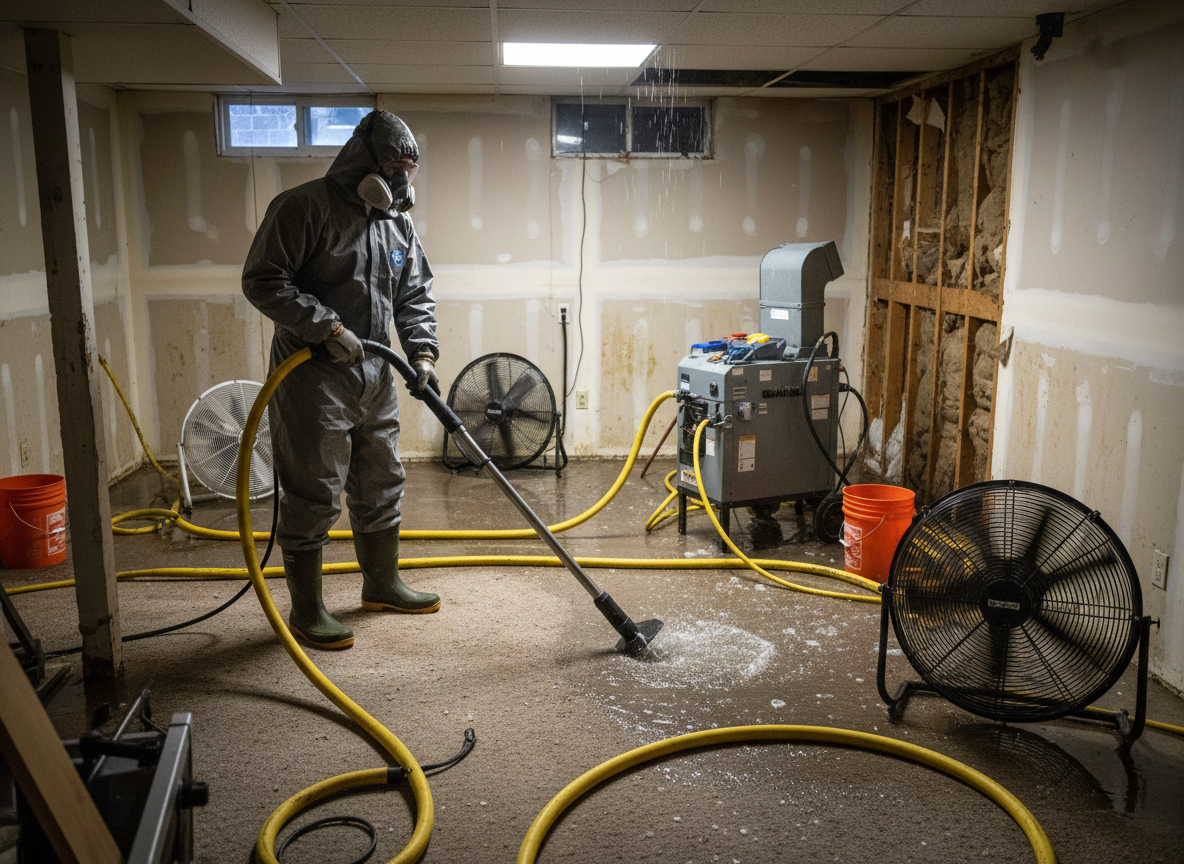
Midvale homes in Old Town and Bingham Junction often feature older plaster and lath walls or slab-on-grade foundations that trap moisture after winter pipe bursts or summer monsoon leaks. Cold semi-arid winters expand small leaks into widespread saturation while warm summers accelerate mold on untreated drywall. Technicians must map hidden moisture with meters because the area's variable soil can pull water under footings from nearby irrigation or street runoff near the Bingham Junction TRAX Station.
Mitigation here focuses on rapid containment to protect adjacent units in multi-family buildings common along Holden Street and Midvale City Park edges. Removing standing water prevents wicking into particleboard subfloors typical of 1970s-1990s construction in West Jordan border neighborhoods. Edge cases include electrical hazards in flooded basements where older wiring meets groundwater intrusion from the county's high water table pockets.
Code considerations arise when mitigation uncovers non-compliant plumbing in Salt Lake County renovations; crews isolate affected zones without disturbing load-bearing elements. Homeowners in Murray-adjacent areas frequently overlook attic condensation from rapid temperature swings, leading to ceiling saturation that requires targeted drying rather than full demolition.
Proper sequencing avoids pushing moisture deeper into insulation or behind cabinets, a common issue when quick cosmetic fixes are attempted before extraction in the dry climate that masks lingering dampness.
Technician insight
In Midvale, the thing that catches most people out with water damage mitigation is how quickly moisture travels under the slab foundations common in Old Town homes once winter temperatures drop. Homeowners often seal the surface too soon and trap it, forcing us to open more flooring later. The semi-arid air hides the problem until it reaches neighboring units near the TRAX line.
Slab Leak in Bingham Junction Duplex
A tenant reported buckling flooring after a slow supply line leak. We found water had wicked under the slab into the adjacent unit's subfloor. Extraction and targeted drying prevented mold growth while preserving the shared wall. The structure dried fully within five days without further demolition.
How it works
- 1
Initial Assessment
Technicians arrive within hours and document moisture levels room by room using meters calibrated for Midvale's mixed foundation types.
- 2
Water Extraction
Standing water is removed with truck-mounted equipment suited to narrow driveways common in Bingham Junction neighborhoods.
- 3
Containment Setup
Plastic barriers and negative air are installed to isolate wet zones from living spaces in older Old Town Midvale homes.
- 4
Drying and Monitoring
Industrial air movers and dehumidifiers run while daily readings track progress until materials reach stable moisture content.
Pricing
Upfront quotes follow inspection; scope depends on affected square footage and material types.