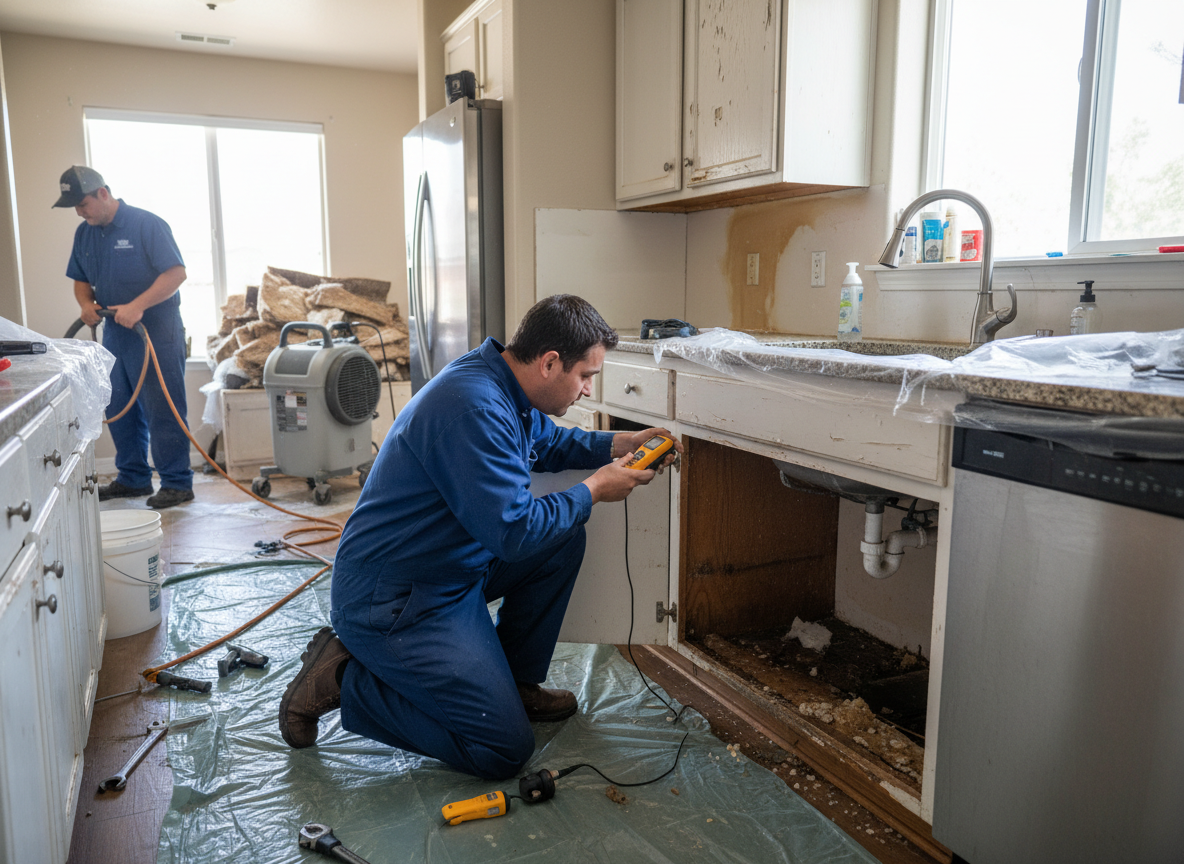
Kitchens in Midvale homes built before the 1980s, especially those in Old Town Midvale and near Bingham Junction, often feature cast-iron or galvanized supply lines that corrode from the inside. When a leak starts under the sink or behind a dishwasher, water travels along the particleboard base cabinets and into the subfloor. Because the area sits on the valley floor with shallow groundwater influence, even modest leaks can saturate the joists before homeowners notice buckling vinyl or soft spots. Technicians must pull base cabinets, check for hidden rot behind the dishwasher kickplate, and use moisture meters on the slab or crawlspace framing to map the full extent.
Winter pipe bursts are common here once temperatures drop below freezing. Many homes near the Bingham Junction TRAX Station still have exterior walls with minimal insulation, so kitchen supply lines against the north wall freeze and split. The resulting water soaks through the drywall, travels under the laminate, and pools at the base of the peninsula. Restoration requires removing the toe-kick, drying the wall cavity with directed air movers, and sometimes replacing sections of the underlayment so the new flooring lies flat. Electrical outlets in the backsplash must be checked for corrosion before power is restored.
Semi-arid summers create a false sense of security; rapid evaporation can hide moisture trapped inside cabinet carcasses or under the dishwasher. Left unchecked, this leads to swelling particleboard and eventual mold on the underside of the countertop. Proper repair includes pulling the dishwasher, inspecting the drain hose connection, and treating any affected wood with an antimicrobial solution before reinstallation. In homes bordering West Jordan or Murray, crews also verify that the floor transition strips have not wicked water into adjacent rooms.
Technician insight
In Midvale, the thing that catches most people out with Kitchen water damage repair is how quickly water travels under the particleboard cabinets in 1960s and 70s homes around Old Town Midvale; once it reaches the crawlspace during a cold snap, you have to open the floor from below or the cabinets never dry right.
Dishwasher leak in Bingham Junction home
A homeowner in Bingham Junction noticed soft flooring in front of the dishwasher after a cold night. We found the drain hose had pulled loose and water had wicked into the subfloor and toe-kick of the peninsula. Cabinets were pulled, the subfloor section replaced, and the area dried before reinstalling the appliance.
How it works
- 1
Initial Assessment
Technician arrives, locates the leak source, and maps moisture in cabinets, flooring and walls using meters.
- 2
Water Extraction
Standing water is removed from under the sink and dishwasher area, followed by removal of saturated baseboards and toe-kicks.
- 3
Drying and Monitoring
Air movers and dehumidifiers are placed; daily moisture readings are taken until cabinets and subfloor reach acceptable levels.
- 4
Repairs and Restoration
Damaged cabinet bases or subfloor sections are replaced, surfaces treated, and appliances reinstalled after final drying verification.
Pricing
Cost depends on how far water traveled into cabinets and subfloor and whether appliances must be removed and reset.