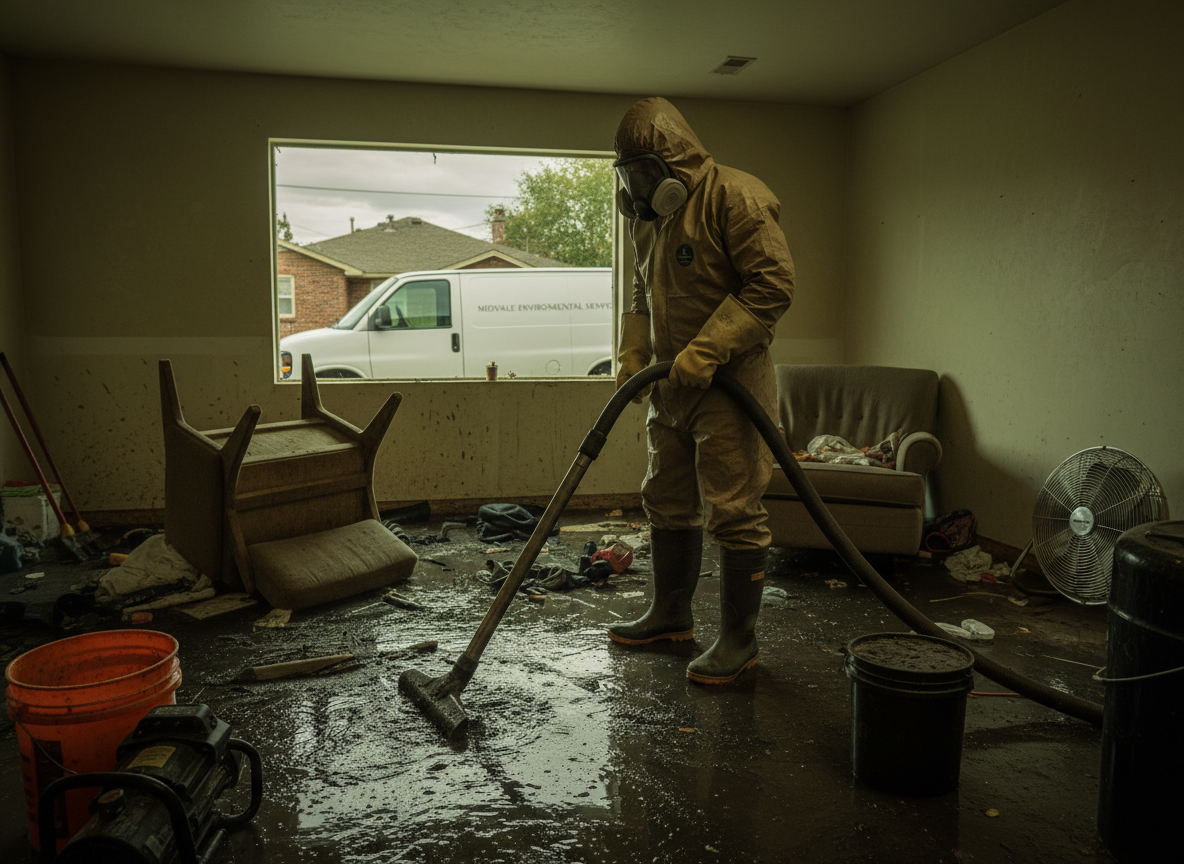
Sewage backups in Midvale often trace to older clay or cast-iron lines common in Old Town Midvale homes built before 1970, where root intrusion from nearby trees at Midvale City Park combines with cold winter ground heave to crack joints. When these lines fail, wastewater can migrate under slab foundations or into crawl spaces, carrying pathogens that survive longer in the area's dry, alkaline soils. Technicians must extract standing water, remove saturated subflooring, and apply antimicrobial treatments while monitoring for hidden moisture pockets that standard fans miss in semi-arid conditions.
Near Bingham Junction TRAX Station and along the Jordan River corridor, newer townhomes in Bingham Junction still see sewage events from overloaded municipal lines during spring snowmelt surges from the Wasatch foothills. Crews isolate the affected zone, bag and dispose of porous materials per Salt Lake County health guidelines, and use negative-air machines to prevent cross-contamination into adjacent units. West Jordan and Murray properties share the same county sewer network, so a single main-line clog can affect multiple neighborhoods simultaneously, requiring coordinated extraction before odors embed in drywall during warm summer months.
Homeowners in Midvale frequently overlook the need to disinfect HVAC returns after a sewage event, allowing aerosolized contaminants to recirculate once systems restart after winter shutdowns. Proper protocol includes HEPA vacuuming, ozone or hydroxyl treatment where safe, and post-remediation air sampling to confirm clearance before reoccupancy.
Technician insight
In Midvale, the thing that catches most people out with sewage cleanup is the way winter freezes push older sewer laterals in Old Town Midvale to shift just enough that backups reoccur weeks later if the line isn't camera-inspected and the soil around it isn't properly compacted after extraction.
Backup During Spring Thaw
A Bingham Junction duplex experienced sewage rising through floor drains after a rapid warm-up melted heavy snowpack. Inspection found a cracked lateral under the slab. Crews extracted wastewater, removed base cabinets and subfloor sections, treated the soil interface, and dried the structure over five days so the owners could return without lingering odors or health concerns.
How it works
- 1
Site Assessment
Technicians arrive within hours, map moisture with meters, and identify the source while protecting unaffected areas of the Midvale property.
- 2
Water Extraction
Industrial pumps and vacuums remove standing sewage, followed by removal of saturated carpet, padding, and baseboards.
- 3
Cleaning and Disinfection
EPA-registered agents treat hard surfaces and subfloors; porous materials are bagged for disposal according to local health rules.
- 4
Drying and Monitoring
Air movers and dehumidifiers run until readings match unaffected zones, with daily checks to prevent secondary mold growth in Utah's variable climate.
- 5
Final Clearance
Post-remediation inspection confirms safe conditions before reconstruction or homeowner reentry.
Pricing
Costs depend on square footage affected, depth of contamination, and whether structural materials must be removed; written estimates provided on-site before work begins.