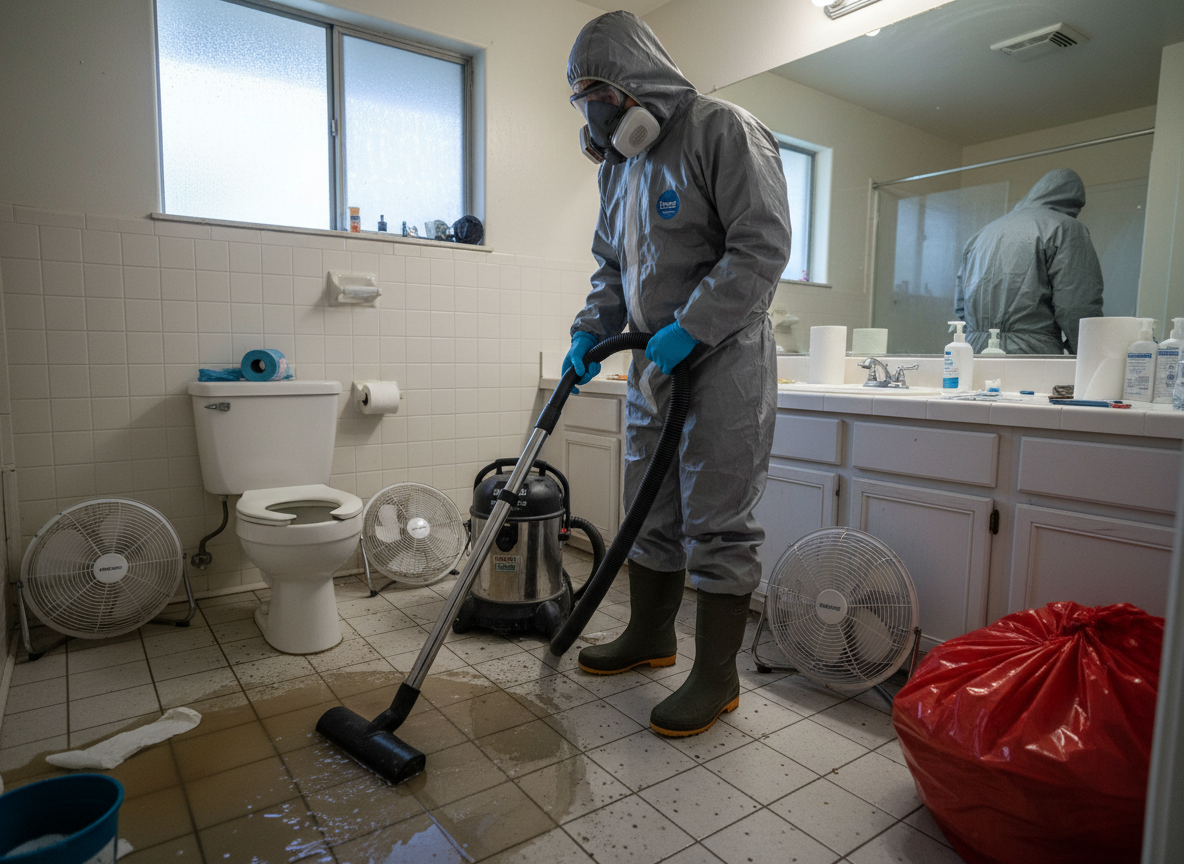
Toilet overflows in Midvale often involve more than surface water because many homes in Old Town Midvale and near Bingham Junction still have original cast-iron or galvanized drain lines that crack or separate when ground shifts during spring thaws. Once water reaches subfloors, it travels under tile or hardwood and pools against foundation walls, especially in the flat lots common around the Bingham Junction TRAX Station. Technicians use moisture meters and infrared cameras to trace migration paths that standard fans miss, then apply EPA-registered antimicrobials rated for Category 3 water before any drying begins.
Salt Lake County cold snaps send pipe bursts through walls and into finished basements faster than homeowners expect, while the area’s low humidity in summer can mask lingering moisture inside cabinets and under vanities until mold appears weeks later. Extraction starts with truck-mounted units that pull standing water through the structure rather than pushing it deeper into porous materials. After removal, dehumidifiers sized for 1,200–2,000 square foot homes run until wood moisture content drops below 12 percent, a step that prevents the musty odors that return every winter in Murray and West Jordan properties.
Homeowners sometimes attempt their own cleanup with shop vacs and bleach, yet the sewage-borne bacteria remain in wall cavities and under baseboards where bleach cannot reach. Solidground Network follows IICRC S500 protocols that require full removal of saturated porous materials when contamination levels exceed safe thresholds. Every job ends with a written moisture log and photo documentation so insurance adjusters see exactly what was removed and why.
Seasonal Guidance
Cold winters increase pipe-freeze overflows in unheated crawl spaces common in Bingham Junction homes, while warm summers accelerate bacterial growth if drying is incomplete. Technicians check attic insulation and exterior grading around Midvale City Park properties because poor drainage funnels meltwater back toward foundations during the first thaw.
Technician insight
In Midvale, the thing that catches most people out with toilet overflow cleanup is the way older cast-iron lines under homes near Bingham Junction TRAX Station let water travel under the slab during our cold winter freezes, then reappear weeks later once the ground thaws.
Overflow Behind Toilet in Old Town Midvale
Water from a cracked wax ring had wicked under the bathroom tile and into the hallway subfloor of a 1960s home. Meters showed elevated moisture extending eight feet into the living room. Crew removed the saturated underlayment, treated the joists, and ran drying equipment for four days until readings returned to normal.
How it works
- 1
On-Site Assessment
Technician arrives within the hour, maps water migration using meters and thermal imaging, and identifies affected materials in Old Town Midvale homes.
- 2
Water Extraction
Truck-mounted equipment removes standing water and sewage from floors, then pulls trapped moisture from under tile and hardwood without demolition where possible.
- 3
Contamination Treatment
EPA-registered antimicrobials are applied to all contacted surfaces; saturated carpet pad, drywall, and insulation are removed per local health guidelines.
- 4
Drying and Monitoring
Industrial dehumidifiers and air movers run until moisture readings meet IICRC standards, with daily logs kept for Salt Lake County insurance requirements.
- 5
Final Sanitation and Documentation
All surfaces receive a second antimicrobial pass; a complete moisture report and photos are provided before the crew leaves the 7505 Holden St service area.
Pricing
Cost depends on square footage affected, depth of water migration into subfloors, and whether structural materials must be removed.